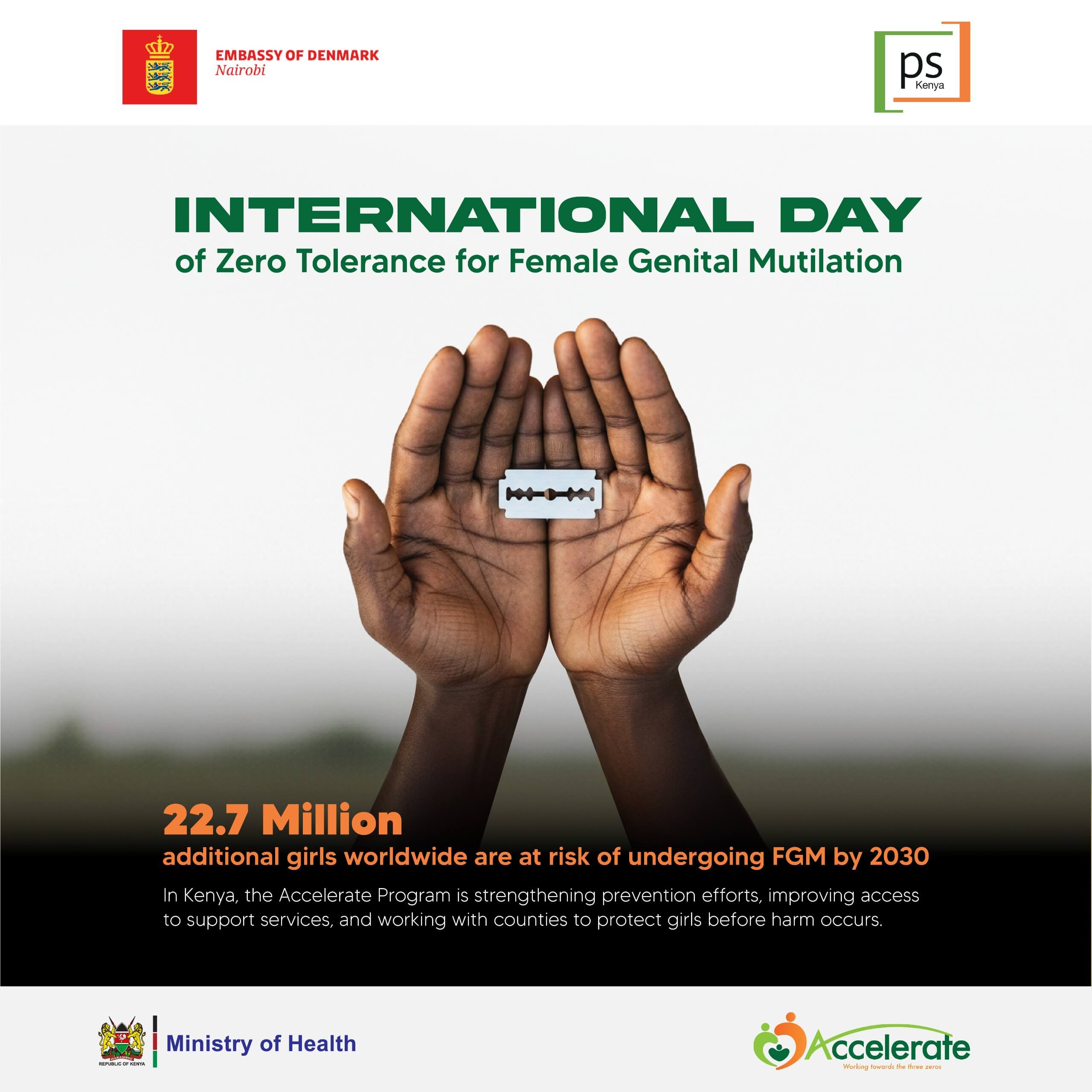
On 6 February 2026, Kenya joined the global community in marking the International Day of Zero Tolerance for Female Genital Mutilation (FGM) at a moment that called for urgency, honesty, and sustained commitment.
FGM remains one of the most harmful violations of the rights, health, and dignity of girls and women. Globally, an estimated 230 million women and girls are living with the consequences of FGM, with millions more at risk every year. While Kenya has made important progress, the practice has not been eliminated, and the path toward ending it remains uneven.
Since the enactment of the Prohibition of Female Genital Mutilation Act in 2011, Kenya has recorded a significant decline in national prevalence, estimated at around 15% among women aged 15–49, down from nearly 38% in the late 1990s. These gains reflect years of advocacy, legal reform, and community engagement. However, national averages continue to mask deep disparities.
FGM persists at disproportionately high levels in ASAL and traditionally practicing communities, including counties such as Samburu, Marsabit, Mandera, Garissa, Narok, West Pokot, Kajiado, and parts of Elgeyo Marakwet and Baringo. In these settings, deeply rooted social norms, misinformation, and economic pressures continue to sustain the practice, often pushing it underground rather than ending it.
The consequences are ongoing and tangible. FGM continues to pose a serious public health risk, contributing to pregnancy and delivery complications, avoidable maternal morbidity, and long-term physical and psychological harm. Many women affected are not only survivors of the practice, but mothers navigating health systems while living with its lifelong effects.
Although Kenya’s legal framework is strong, the law alone has proven insufficient to dismantle a practice sustained by social expectation and fear of exclusion. Where enforcement is not paired with community engagement, FGM becomes hidden. Where awareness is not matched with viable alternatives, families remain without pathways to change. At the same time, shrinking resources and funding uncertainty threaten to reverse hard-won gains, even as community-based organizations, women-led groups, and youth networks continue to play a central role in prevention and protection.
The 2026 theme, “Towards 2030: No End to FGM Without Sustained Commitment and Investment,” reflects this reality. Ending FGM requires more than moments of attention. It demands political leadership, strong systems, sustained financing, evidence-driven action, and approaches that center the voices of girls, survivors, and communities.
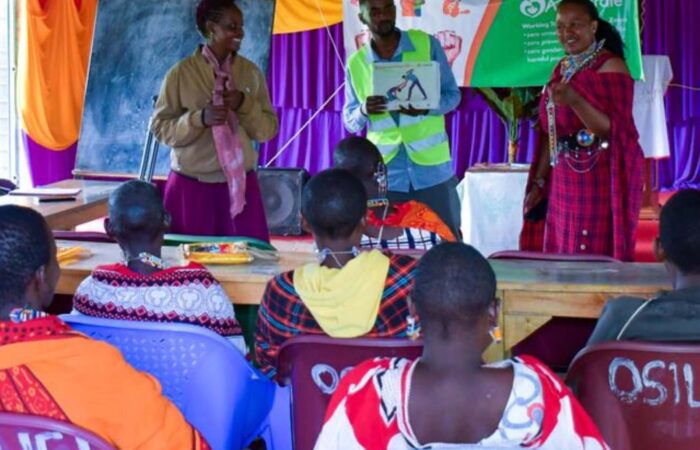
Through the Accelerate Program funded by the Embassy of Denmark in Kenya, PS Kenya, working in collaboration with the Gender Violence Recovery Centre and Population Services International, contributes to these efforts by supporting prevention that begin before harm occurs. Working with county governments and through community-based organizations, the program strengthens local systems to address FGM as both a human rights violation and a public health challenge. Accelerate supports community-led prevention, challenges myths that sustain the practice, promotes alternative rites of passage, engages men and boys as allies for change, and reinforces coordination across health, justice, and child protection structures.
Embedding prevention within county systems and community networks allows Accelerate to ensure progress is practical, measurable, and sustainable, reducing reliance on crisis response and strengthening long-term protection for girls.
As Kenya continues its journey toward 2030, the message from the Day was clear. Ending FGM remains possible, but only if progress is protected and scaled. Sustained investment, coordinated action, and community-led solutions determine whether gains are preserved or lost.
PS Kenya remains committed to working alongside counties, communities, and partners to safeguard progress and advance a future where every girl grows up free from harm, and where FGM has no place in Kenya’s health system, culture, or society.